News
Jensen Huang resigns as Nvidia CEO after 33 years: who is in charge now and what happens to the stock
The founder leaves the top job and the board with immediate effect. Chief financial officer Colette Kress takes over on an interim basis. The shares have fallen for six straight weeks and earnings are due on Tuesday.
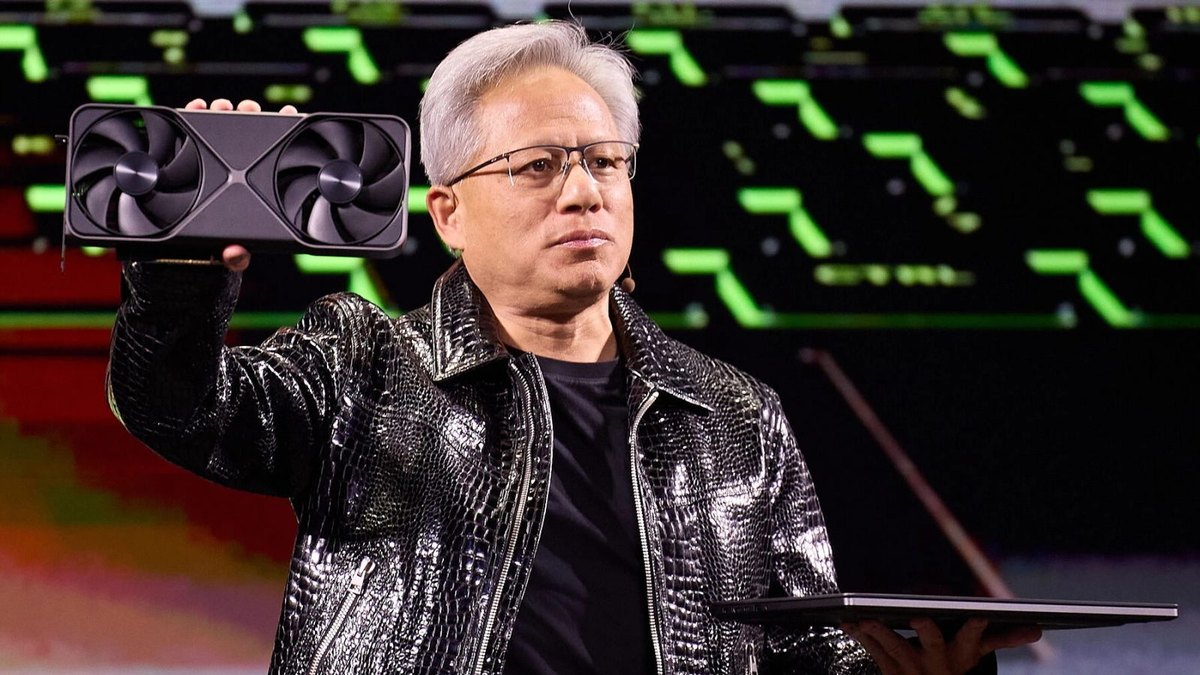
- Nvidia announced on Thursday 12 November that Jensen Huang is stepping down as president, chief executive and board member with immediate effect. The statement gives no reason.
- Chief financial officer Colette Kress becomes interim CEO and keeps her current role. Harvey Jones becomes chair of the board, a post that did not previously exist separately.
- The shares closed on Friday at $162.85: down 12.75% on the week, a sixth straight weekly fall, and below a $4 trillion valuation for the first time since July 2025.
- His exit does not close the case: the board is still investigating, shareholders have sued and Congress wants to hear from Huang, who is reportedly willing to testify next week.
- The first test comes with quarterly earnings, expected on Tuesday 17 November.
Thirty-three years after founding Nvidia in a roadside diner in California, Jensen Huang no longer runs the company. On Thursday 12 November, before Wall Street opened, the company said Huang was stepping down as president, chief executive and member of the board, with immediate effect. A spokesperson added that he will not be working with Nvidia “in any capacity”.
It is the outcome of the week we covered in Nvidia prepares to fire its CEO, Jensen Huang. Of the four scenarios we set out then, the most abrupt one has come true: an immediate exit and an interim replacement from inside the company.
What the statement says, and what it leaves out
The official text, which Nvidia also filed with the US securities regulator, is short. It announces the resignation, names chief financial officer Colette Kress as interim chief executive and, for the first time, separates the role of board chair from that of chief executive. The chair goes to Harvey C. Jones, a long-serving director and former chief executive of Synopsys. The board will look for a permanent successor among internal and external candidates.
Its only comment on Huang is one of thanks: the board and the company thank him “for his immeasurable contributions to the company and the industry”.
What stands out is what is missing. The statement does not explain why he is leaving. It does not mention the relationship Huang admitted with Alice Huang, whom US intelligence links to Beijing, something China denies. Nor does it mention the second relationship that the press attributes to him with an executive at the company, which neither of them has confirmed. And it does not make clear whether the resignation was voluntary: according to one source quoted in the US press, the board had decided to remove him the night before. The official version is that he resigned.
How the market reacted
| Session | What happened to the stock |
|---|---|
| Wednesday 11, after hours | Falls more than 8% on reports that the board was preparing his exit |
| Thursday 12 | Plunges more than 13% at the open, then trims the loss to about 4% by the close |
| Friday 13 | Falls another 2.01% and closes at $162.85 |
| The week | -12.75%. Sixth weekly fall in a row, the longest streak since 2012 |
Nvidia ended Friday with a market value of about $3.9 trillion, below $4 trillion for the first time since July 2025. Around $585 billion was wiped out in the week alone. At least ten Wall Street research firms have cut their rating from “buy” to “hold”.
Our reading. The fact that the stock opened 13% down on Thursday and closed 4% down says something important: the initial panic found buyers. One part of the market believes that Nvidia without Huang is still the company selling the chips everyone needs. The other part, the one behind the downgrades, is not questioning today’s business but who will decide the business five years from now. Both are right at once, which is why the stock has neither collapsed nor bounced.
Who is Colette Kress
Kress has been Nvidia’s chief financial officer since 2013 and is the company’s face to investors: she is the one who explains the numbers every quarter. She knows the company and offers continuity, which is what the board needed in the middle of the storm. But she keeps her finance job at the same time, and the US press was already describing her as an interim solution, not a long-term bet. She is not a product engineer and has not been the technology strategist, the role Huang played in person.
For the permanent job, outside names such as Lisa Su of AMD and Rene Haas of Arm have been floated, along with insiders such as the veteran Jay Puri. None is confirmed. The betting markets that had Madison Huang, the founder’s daughter and an executive at the company, among the favourites make less sense after such an abrupt exit by her father.
What remains open
The resignation changes the organisation chart, but it closes none of the fronts.
| Front | Where it stands |
|---|---|
| Internal investigation | According to sources quoted in the press, the independent directors will keep investigating Huang despite his departure |
| US Congress | The chairs of three committees warned they will compel him to appear if he does not do so voluntarily. According to one of them, Huang is willing to testify next week |
| Shareholder lawsuit | Continues in California at an early stage. Nothing has been proven |
| Megaspeed and chips to China | The Justice Department is investigating whether that company got around export restrictions. Megaspeed denies it |
| Export rules | Lawmakers from both parties want tighter control over sales of AI chips to China |
The last point may matter most for the business. Huang was the leading advocate of continuing to sell in China. Without him, and with Congress angry, Nvidia loses its best negotiator just as it is being decided who it can sell to.
What could happen now
One date outweighs all the others: Tuesday 17 November, when quarterly earnings are expected. It will be the first time Nvidia reports them without its founder.
If sales keep growing strongly and Kress conveys calm, the market will have reason to separate the company from the person, and the search for a successor can proceed without haste. That is the scenario in which the scandal ends up being a bump in the road.
If the figures or the outlook disappoint, two doubts will combine: the one about leadership and the one about the artificial intelligence boom itself, which already triggered the tech sell-off of 5 November.
And there is a third, slower path: nothing breaks in the short term, but without Huang talent leaves, big customers speed up their own chips and the company gradually loses the edge that made it unique. That risk will not show on Tuesday but over the coming years.
What it means for you
If you hold an index fund tracking the S&P 500, the Nasdaq or the MSCI World, or a global equity pension plan, you own Nvidia. A week like this one is felt, but in a cushioned way: your money is spread across hundreds of companies, and several of Nvidia’s competitors have risen in recent days.
If you own the stock directly, the temptation is to act now, one way or the other. The prudent thing is to wait until Tuesday: within hours there will be real numbers and a first message from the new management. And whatever happens, this case leaves a lesson that applies to any portfolio: it is unwise for a large share of your savings to depend on a single company, let alone a single person.
Educational content: this is not financial advice or a recommendation to buy or sell. We will update this story with the 17 November results.
Sources
- NVIDIA Announces CEO Transition (comunicado oficial) — Nvidia
- Formulario 8-K: NVIDIA Announces CEO Transition — SEC (regulador bursátil de EE UU)
- Nvidia CEO Jensen Huang resigns: Live updates (CNBC) — CNBC
- Nvidia closes below $4T market cap for first time since July 2025 in Huang fallout (CNBC) — CNBC
- Nvidia CEO Jensen Huang resigns in wake of affair with woman suspected of spying for China (CBS News) — CBS News
- Nvidia's board is still investigating Jensen Huang despite his resignation, sources say (NBC News) — NBC News
- Why did Nvidia CEO Jensen Huang resign, and who is Colette Kress? (Al Jazeera) — Al Jazeera
- Colette Kress named Nvidia interim CEO as Jensen Huang's abrupt resignation raises investor concerns (Fox Business) — Fox Business
- Nvidia CEO Jensen Huang resigns amid alleged affair with reported spy (ABC News) — ABC News
- Nvidia CEO Jensen Huang steps down amid alleged spy scandal (NPR) — NPR
This article is a translation of our Spanish original, produced with the help of artificial intelligence. Read the original in Spanish.